

Paving-stone patios, walkways & driveways
Interlocking pavers laid on a base built like a road base, so the surface stays flat and level for years. We cover the Lower Mainland and the Fraser Valley.
What we lay
Most paver problems are base problems. The stone almost never fails. What sinks, dips and heaves is the ground underneath it, laid too thin or never compacted. We are an excavation and site company first, so the base under our pavers is dug to depth, built from compacted crush and given the right fall before a single stone goes down.
- Patios and outdoor living areas. Flat, drained ground for a table, a firepit or an outdoor kitchen.
- Walkways and paths. Front walks, side-yard paths and garden runs that stay level instead of tilting toward the house.
- Paver driveways. A finished surface built on a driveway-grade base. More on the driveways page.
- Steps and landings. Paver and slab steps between grades, tied into the patio or the front entry.
- Pool and hot-tub surrounds. Slip-aware pavers set with the drainage the wet area needs.
- Repairs and re-lays. Sunken or lifted pavers pulled up, the base fixed, and the same stone reset so the patch does not show.
A patio often comes with a grade to hold or planting to finish it off. We build the retaining wall and handle the landscaping in the same job, so the whole yard gets done by one crew. If you want to see the stone first, there are photos of patios, paths and steps we have laid, base through to the last cut.
Base first, pavers last
Excavate and build the base
We strip the topsoil, dig out soft spots and build up compacted crush in lifts to the depth the surface calls for. Separation fabric goes down where the clay needs it, and the base is set with a slight fall so water runs off instead of pooling under the stone.
Lay, cut and compact
A screeded bedding layer, then the pavers set to the pattern you picked. Edges and curves are cut to fit, and the field is plate-compacted so every stone seats into the base at the same level.
Edge, sand and clean
Edge restraint locks the border so the field cannot spread. Joint sand is swept in and set to knit the stones together, then the whole surface is cleaned down. You get a patio that is ready to use.
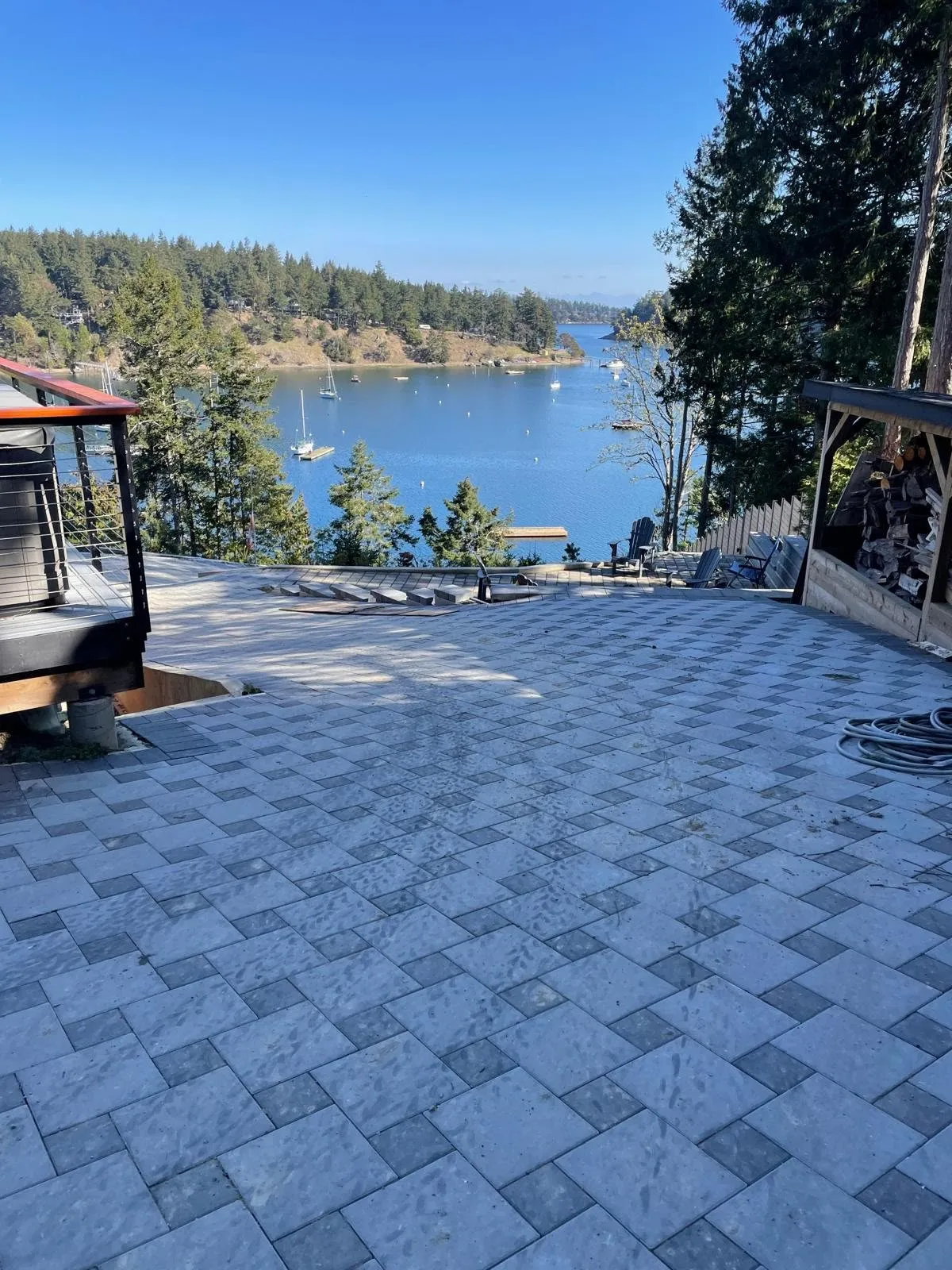
with the base.
The part you never see
The base is the whole job
Digging and compacting a proper base is our day job. That is the difference between a patio that stays true and one that ripples after a couple of winters. We build it the way we build a road base, then lay the stone on top. See excavation.
Rain, clay and frost
Lower Mainland clay holds water, and water under a thin base moves the stone every time the ground swells or the odd frost sets in. That is why we dig to depth, drain the base and set the fall for the wet months instead of the day of the install.
Pavers versus concrete
A concrete slab cracks in one place and you live with it or replace the whole pour. Pavers flex with the ground, and if one ever settles we lift that stone, fix the base and set it back. No slab-wide crack to look at.
Covered, on every job
Insured and WorkSafeBC covered. We recently finished a roughly 10,000 sq ft paving-stone and retaining-wall project, base through to the last stone as one package.
"We hired Clearway Site Services to fix the sunken pavers on our driveway because water kept pooling every time it rained… Billy came by the very next day, explained exactly what needed to be done, gave us a fair and competitive quote, and let us know when they could start. His crew arrived on time, worked hard, and left everything spotless when they were finished. Our driveway looks amazing, and the pooling water is finally gone."
Kelly R.
Common questions
Pavers or stamped concrete?
Will the pavers sink or heave?
How long do paving stones last?
Do pavers need sealing and upkeep?
Thinking about a patio?
Send a photo of the space and rough measurements. We'll come look, and the quote includes the base work, not just the stone on top.
Request a quote